...From Texas to Missouri
and back
Our first stop was in St. Charles, Louisiana, for breakfast at the Pujo Street Cafe. Their beignets are pretty darn good...nice and warm with lots of powdered sugar.
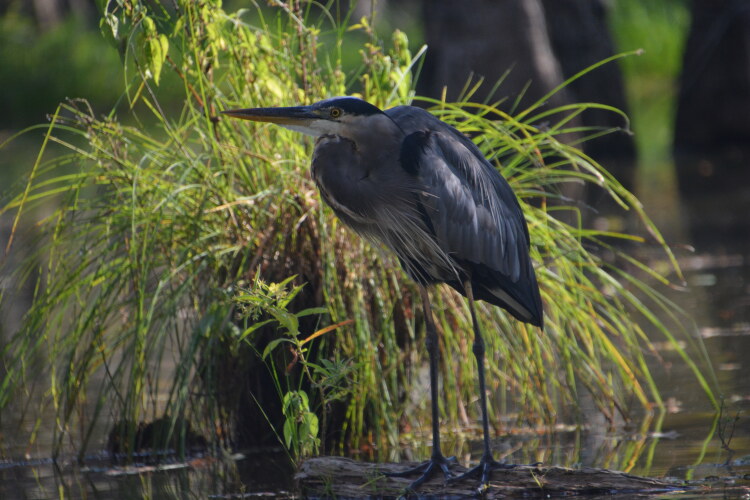
Herons, this one a Great Blue, can be deceiving and almost look like another species when their neck appears to sink down into its body. The colors of the great blue are recognizable, shades of blue and gray. When they're searching for food, and their neck is stretched out, they are close to majestic.
I'd be a bit disheartened, too, if I were missing a leg.
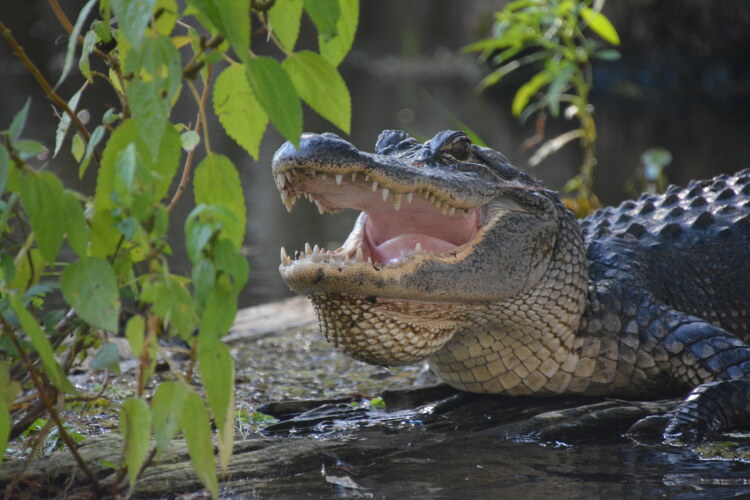
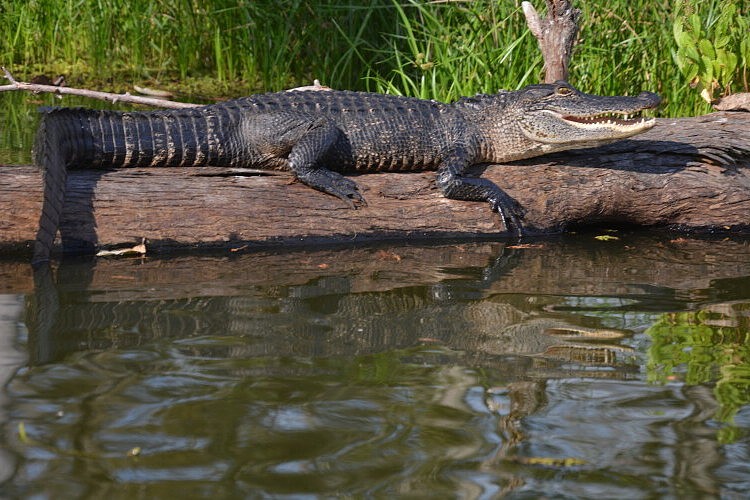
Alligators typically have between 74 and 80 teeth at any given time.
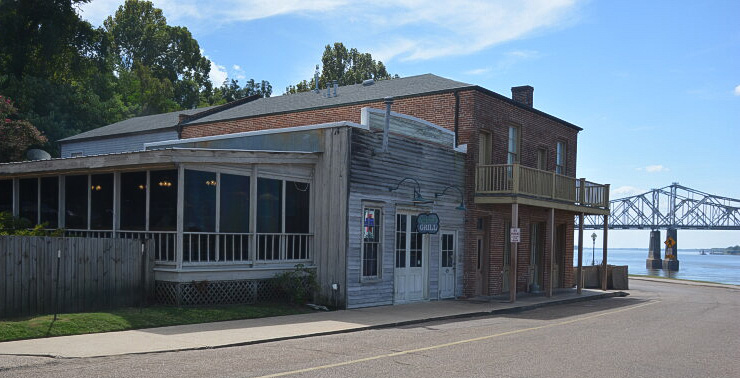
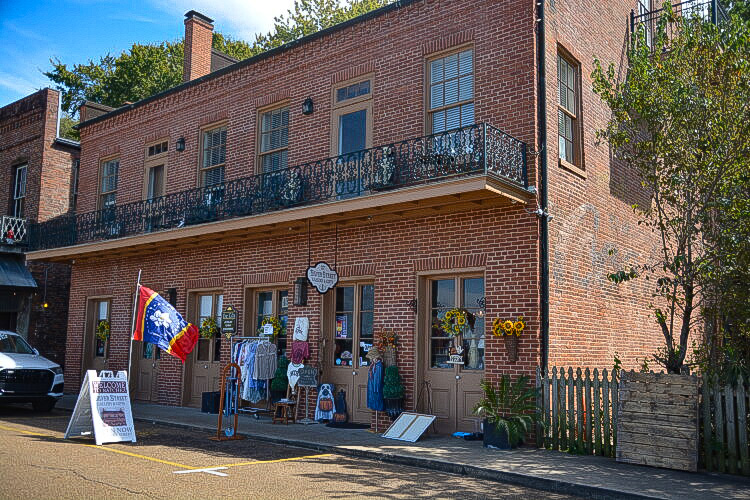
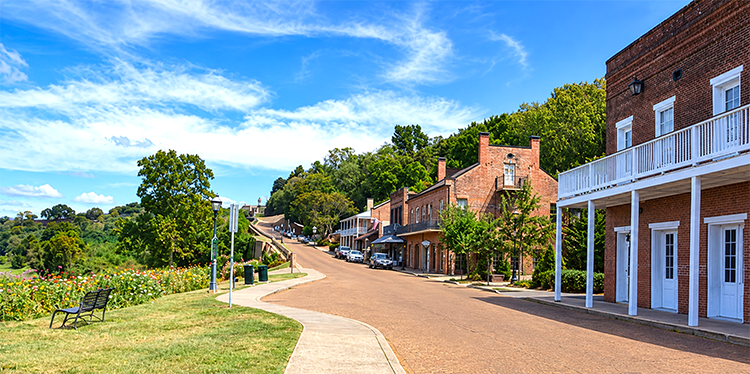
We spent our second day in historical Natchez, Mississippion the Mississippi River. You could say we took both the high road and the low road. "Above the hill" in Natchez are stately mansions and plantations where the wealthy and refined lived their lives and slaves were at their beck and call. "Under-the-hill, " a name that has stuck to this day, was the waterfront where the rowdy and rambunctious hung out. These were the cardsharps and entertainers, the traders and gamblers. Today, Under-the-Hill is a lively row of shops and restaurants, the Magnolia Grill (pictured in the photo above , left) being a highlight. It looks pretty deserted in the picture, but it was holding its own with a room full of hungry locals and tourists alike. Nightime brought a whole new crowd, taking on an ambiance of energy and high spirit.
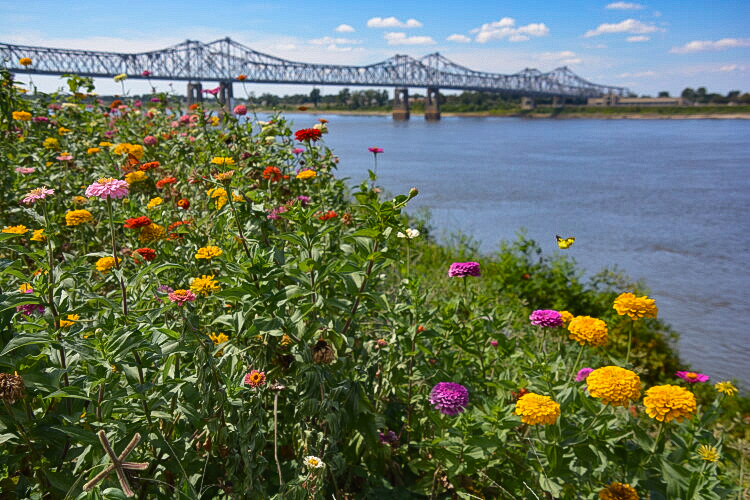
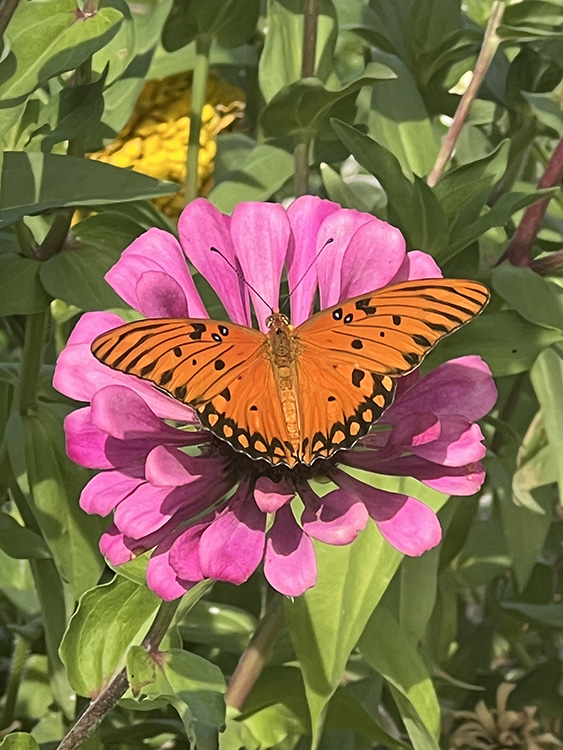
Zinnias Under-the-Hill were populated with a multitude of happy butterflies. Photo by K. Ashmore
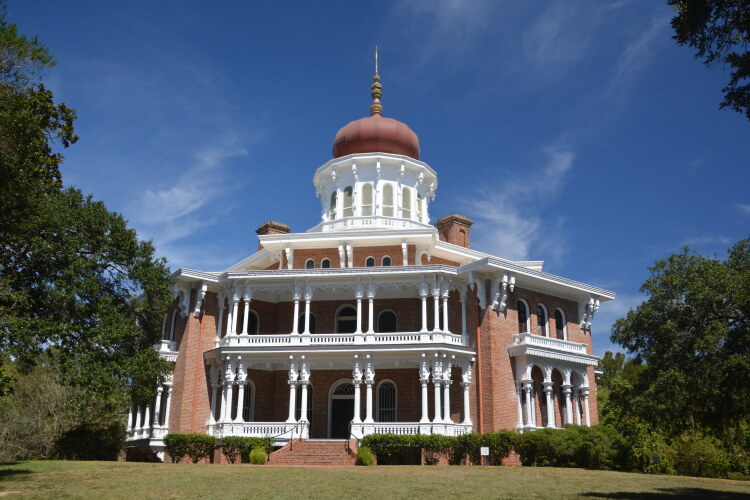
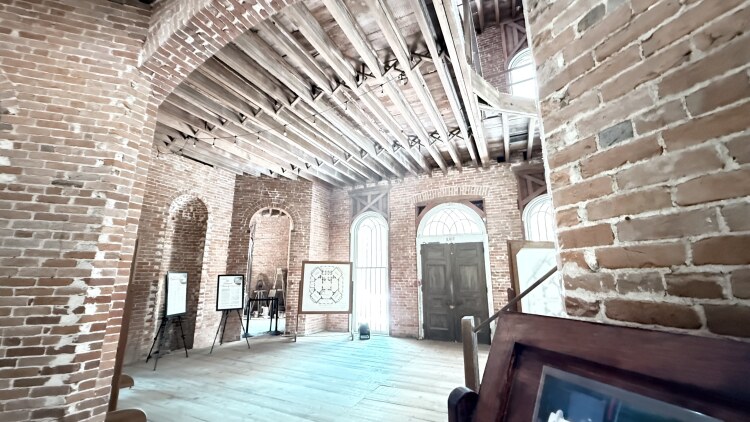
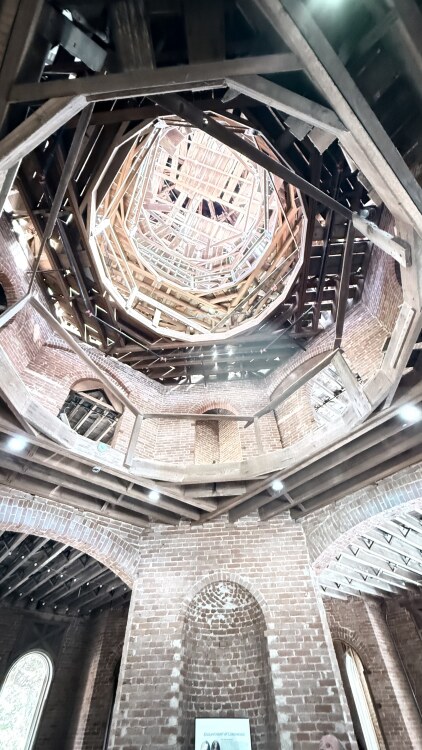
One of the main features of the Longwood mansion was its rotunda, rising six floors from the ground floor and centered in the room. It was multi-functional, allowing sunlight, ingeniously acting as an air-ventilation system and, just as importantly, a striking centerpiece for guests.
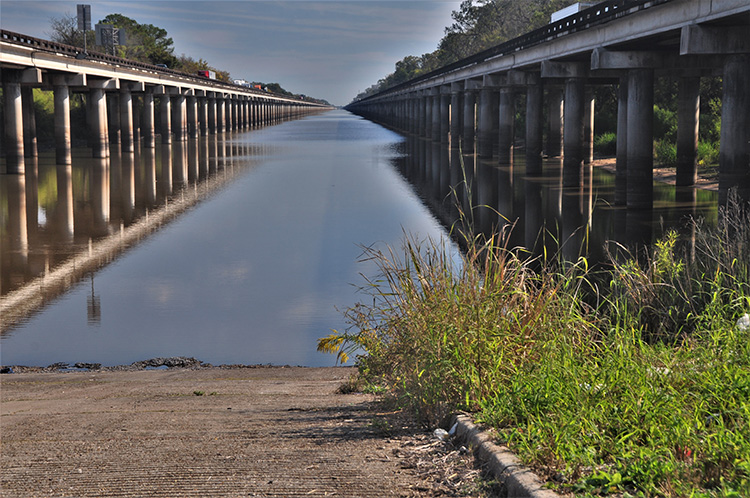
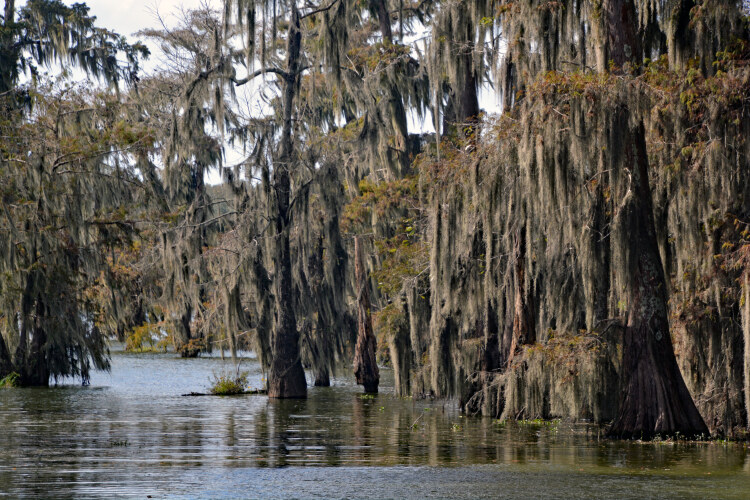
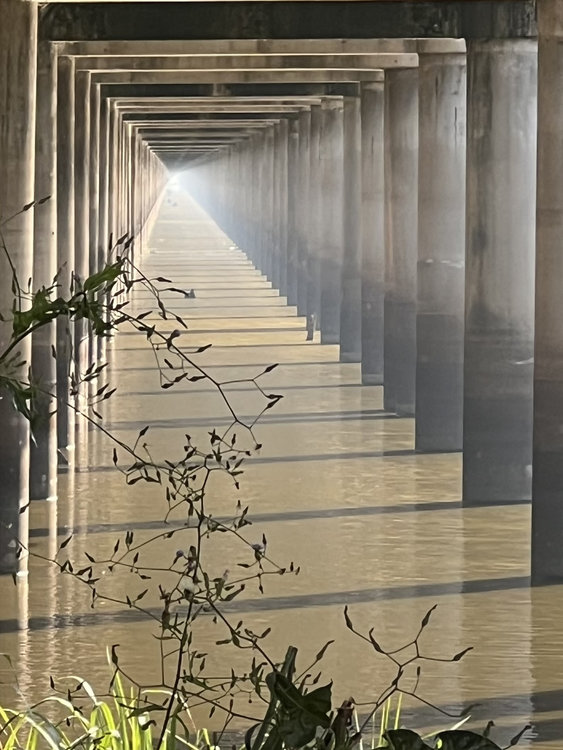
This was the first trip into Louisiana and Mississippi for my two north-westerner pals, so I thought an introduction to true Cajun country was order. That would be a drive over the 18-mile-long Atchafalaya Basin Bridge and a swamp tour.
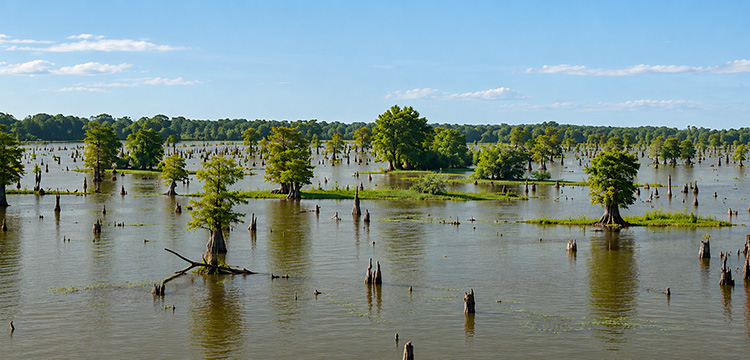
The Atchafalaya Basin is America's largest swamp, covering nearly a million acres of swampy lakes and bayous.It runs 140 miles from south central Louisiana southward to the Gulf of Mexico.
Larger than Florida's Everglades, it's a perfect habitat for a variety of coastal birds, turtles and alligators and produces 22 million pounds of crawfish annually.
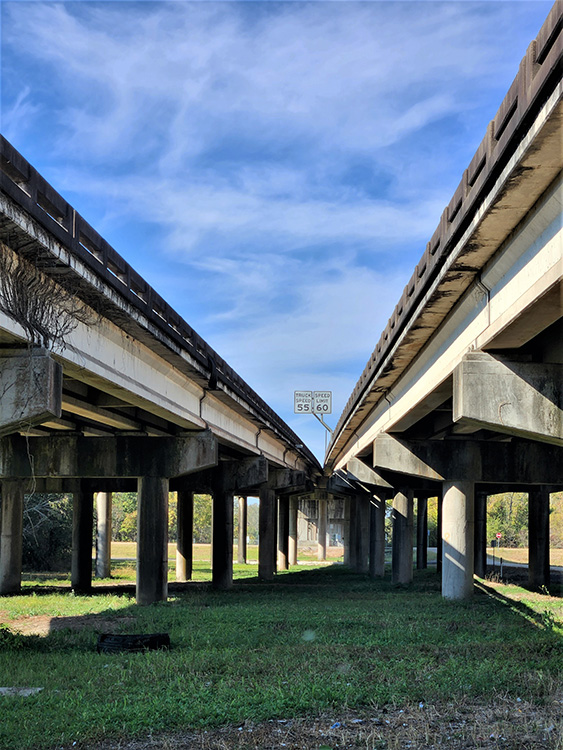
The Atchafalaya Basin Bridge is actually a pair of bridges, east-bound and west-bound, that carries Interstate 10 over the Atchafalaya River beween Lafayette and Baton Rouge. It opened in 1973. Prior to that, there was no direct route between the two cities other than train. Motor vehicles had to take long detours.
Photo by K. Ashmore
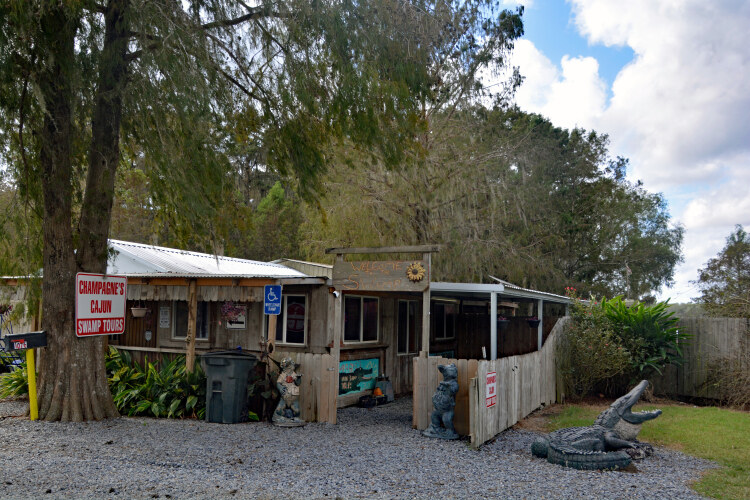
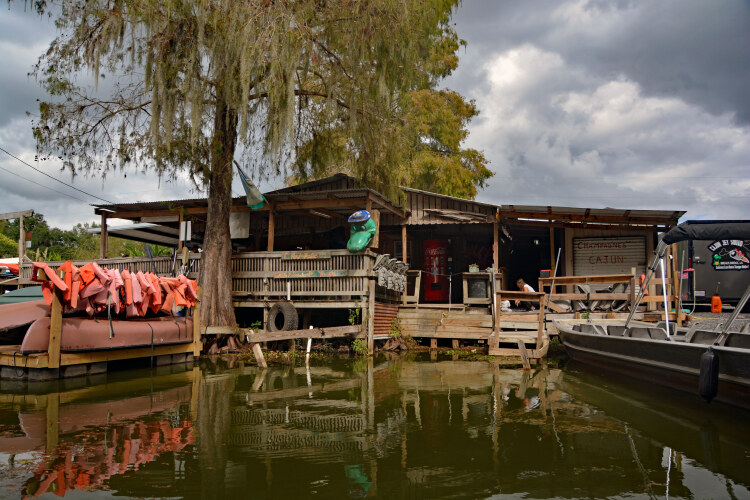
One of several swamp tours in the basin is Champagne's Swamp Tours in Breaux Bridge, east of Lafayette. It's a one-hour tour on St. Martin Lake with guides who know the swamp like the back of their hands. Our guide was Jimmy, and you could tell he never tired of roaming the basin, even after 9 years of doing so.
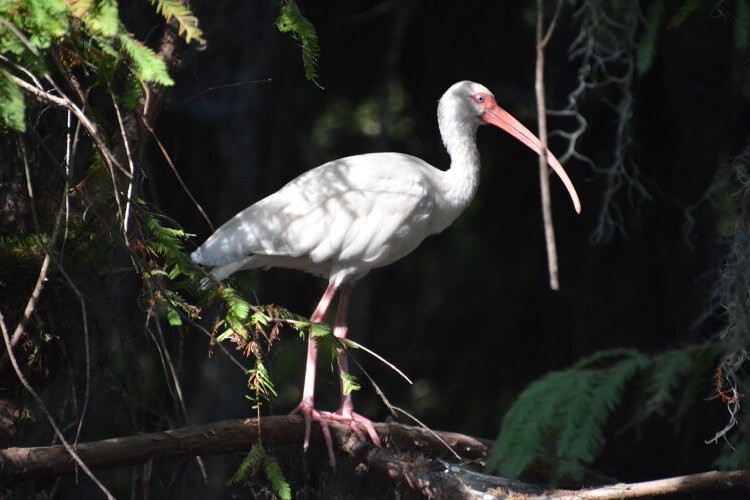
Ibis are recognized by their long curved bill.
The Atchafalaya Basin is said to have one of the largest alligator habitats in North America. At present, 70,000 to 80,000 adults is estimated. I guess that's believable when you consider the basin covers nearly a million acres.
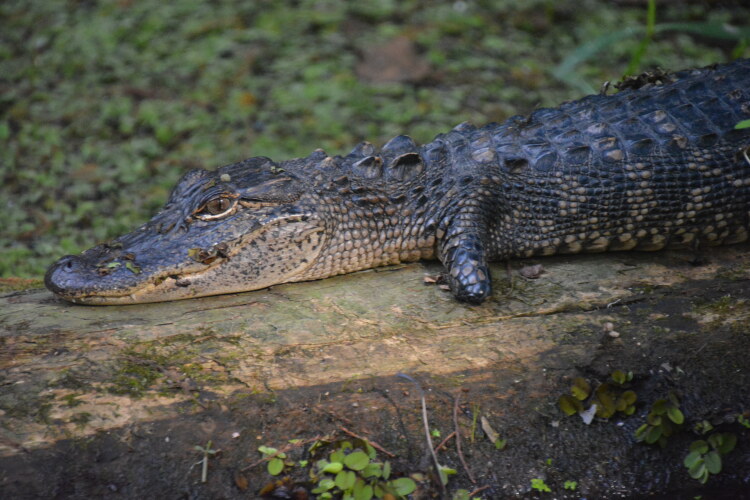
You can bet Mom was close by and not happy when we zeroed in on this baby alligator. This photo was ChatGPT enhanced for clarity.
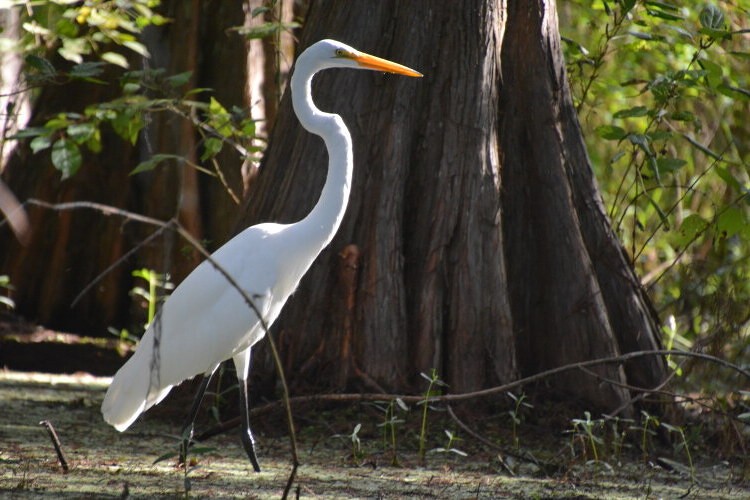
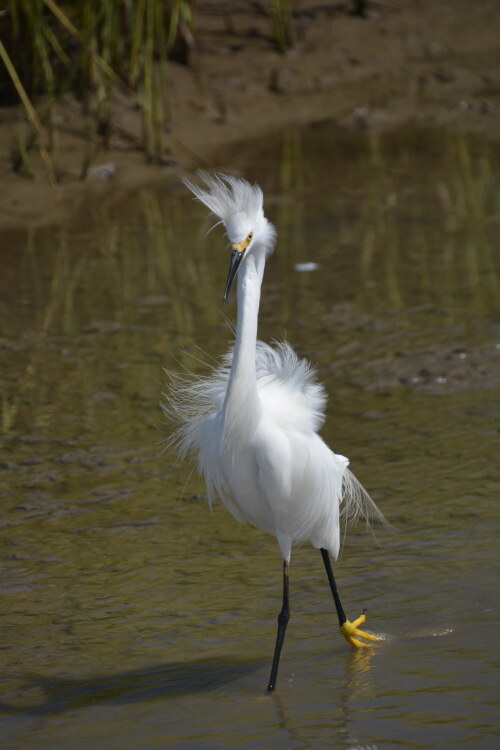
This is a white egret. Egrets and herons are in the same family, but typically egrets are white, and herons are darker colors. Egrets are usually smaller than herons.
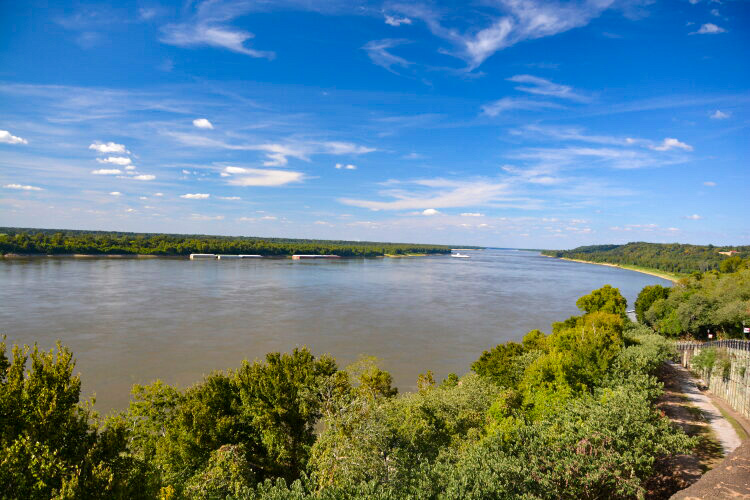
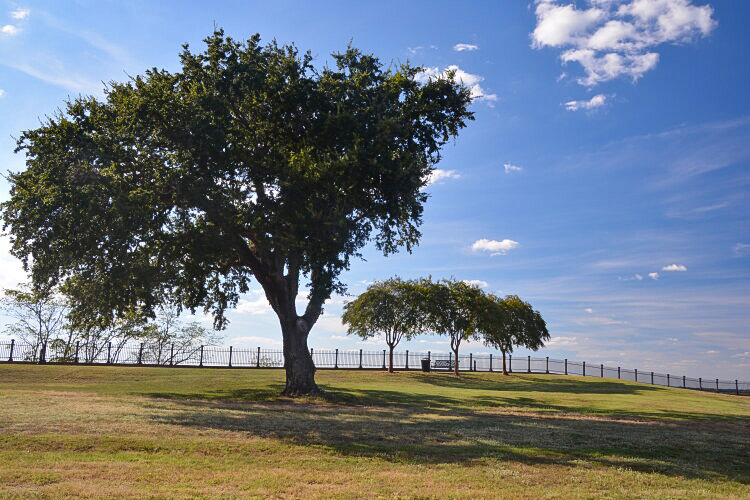
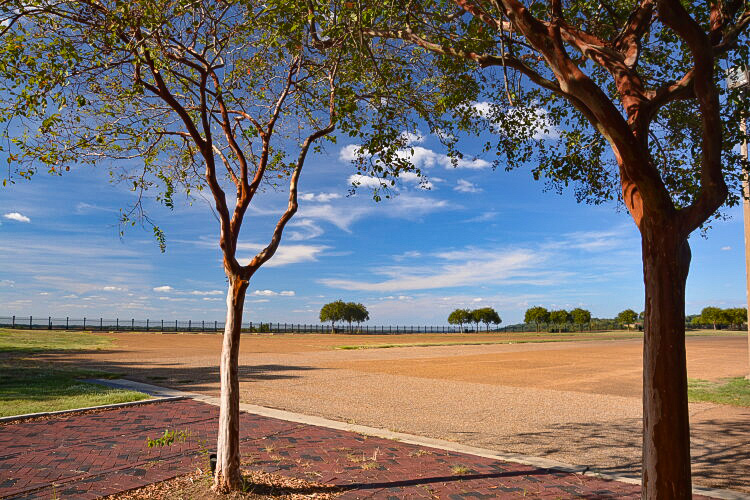
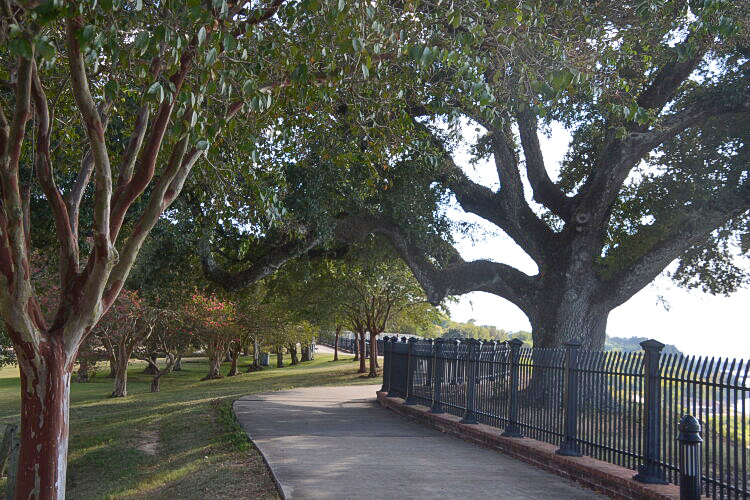
Nice hiking trails parallel the Mississippi River. We strolled along an upper path called the Natchez Bluff Trail which was sporadically lined with crape myrtles and live oaks.
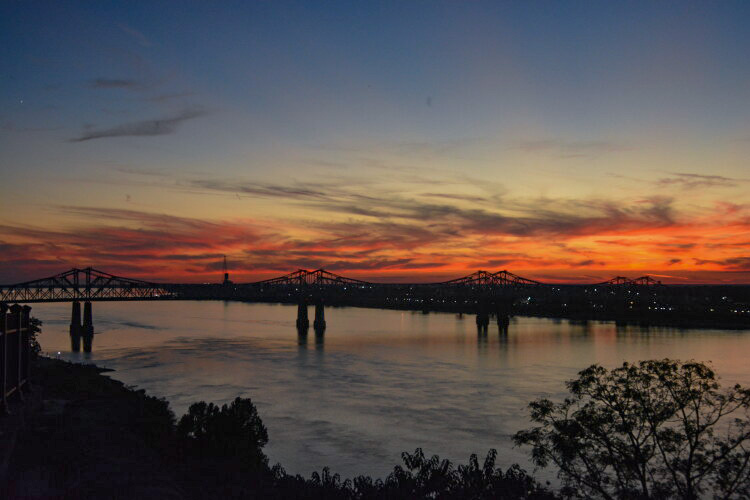
Sunset over the Natchez-Vidalia (Louisiana) bridge
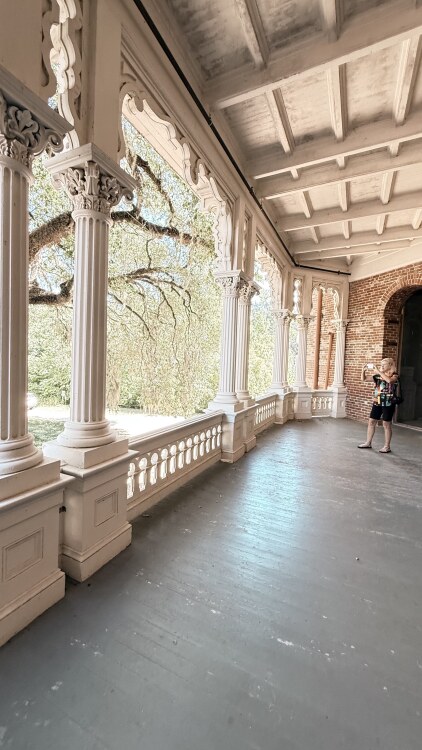
One of Natchez's most well-known mansions is the Longwood mansion. Not only is it known for being the largest octagonal-shaped home in the nation, it's larger attraction is that it has never been finished.
So, here's the story: Dr. Haller Nutt was a wealthy cotton magnate who, in 1859, hired an architect to build a mansion with character, one that would stand out from the other mansions in the area. Most of his workers were northern craftsmen, so that when the Civil War started in 1861, they abandoned the construction to join the war effort, leaving the mansion unfinished.
Haller Nutt died in 1864, but his family (wife and eight children, and generations thereafter) lived in the completed basement of nine rooms until it was sold in 1968. A stipulation in the purchase of the mansion was that it remain unfinished.
Known today as "Nutt's Folly," that's the story in a nutshell.
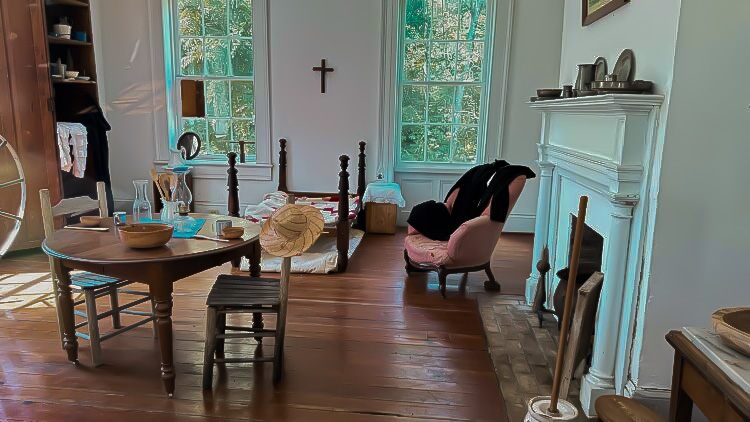
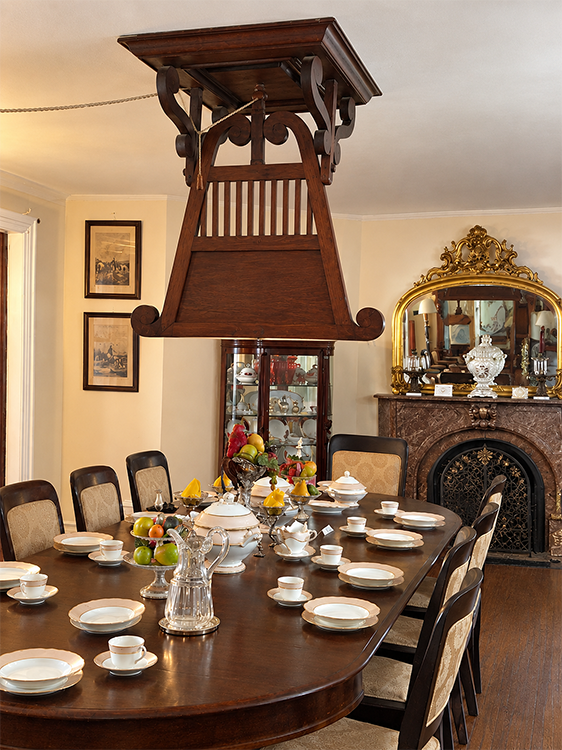
Called a "shoo-fly fan," a slave laborer would pull the string attached to the fan so that it would swing back and forth, keeping the flies away.
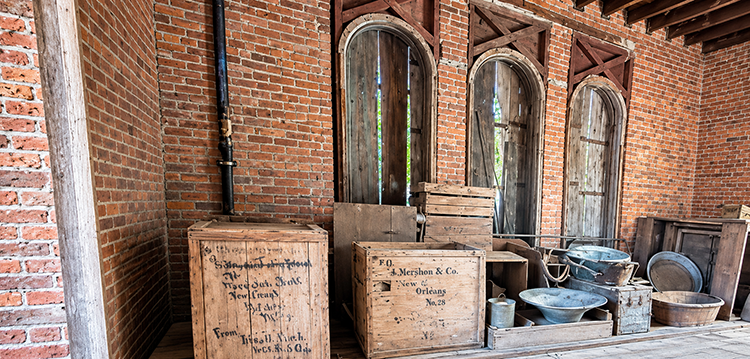
Stored forever will be items such as the "bonnet tub" (in the center of the photo) to be used by the ladies for bathing. (It's larger than it appears in this photo.)
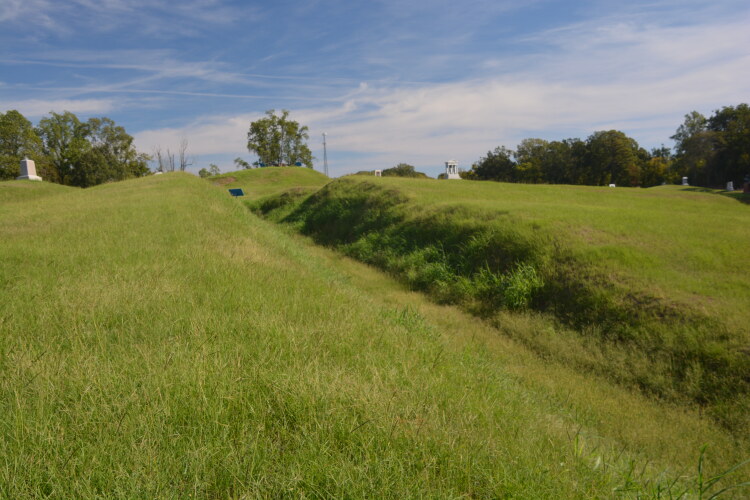
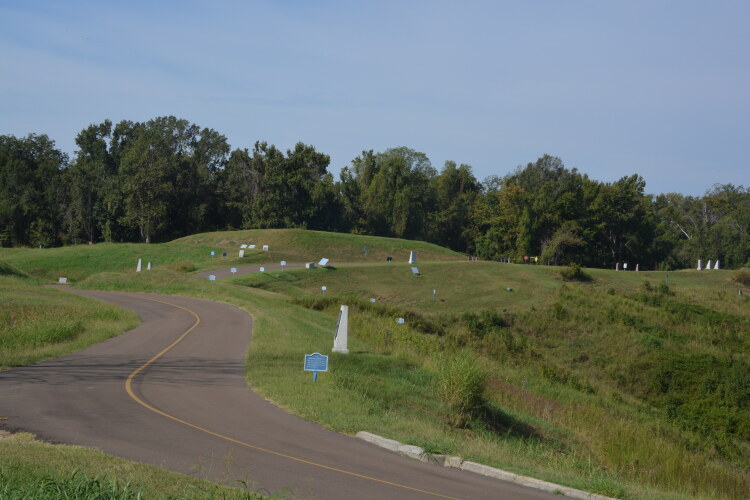
The Battle of Vicksburg was fought from March 29th to July 4th,1863. It is significant because it was one of the last battles to put the Union a step closer to winning the Civil War. By taking over the nearby Mississippi River, it basically split the Confederates into two halves, thereby blocking southerners from moving soldiers and supplies across the river. This was a major weakening point for the Confederates and a feather in the cap of the Union leader Ulysses S. Grant who would, six years later, become the 18th President of the United States. One day before the Union's Vicksburg victory on July 4th was its victory of the Battle at Gettysburg.
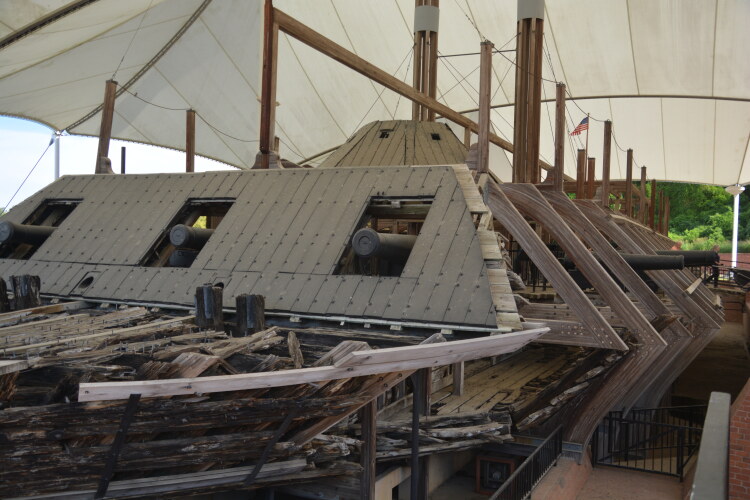
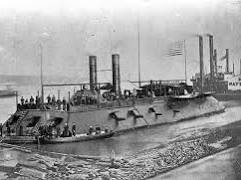
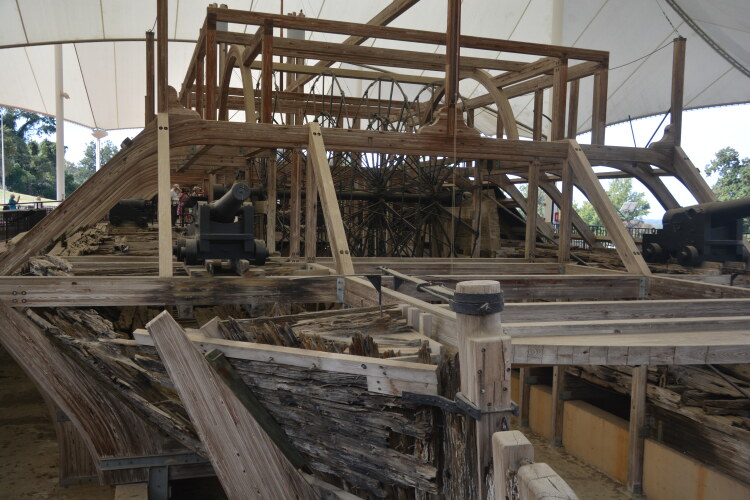
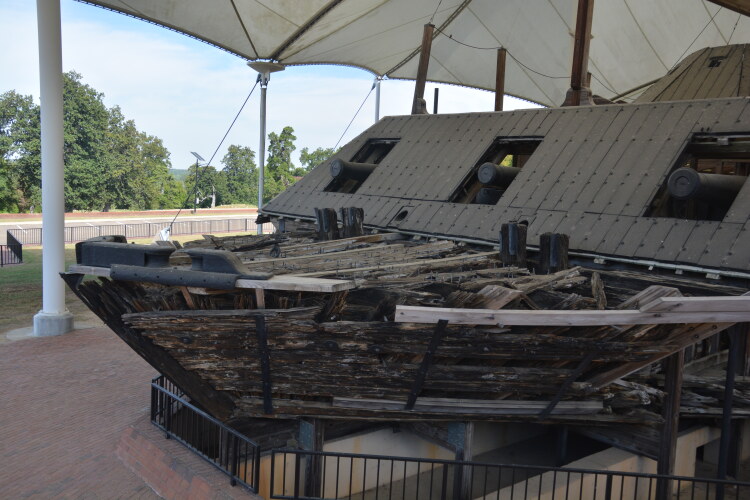
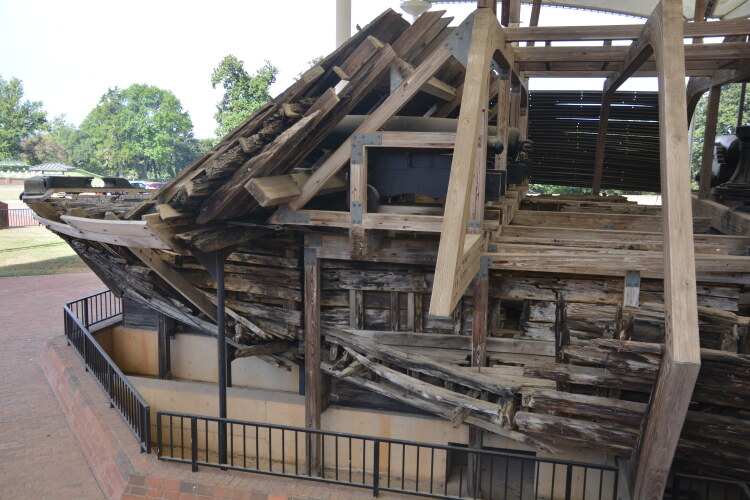
It's hard to imagine from this picture (because of all the framework holding it together) what the Union's river gunboat, the USS Cairo, looked like as it traveled down the Yazoo River on December 12,1862, searching for explosives. Unfortunately, it found one the hard way, or rather, the explosive found it. One logical theory is that the Confederates had strung explosives on a line across the river. When the ship hit the line going forward, it drove the line toward the ship, detonating the explosives. The crew survived, but the ship remained sunk in the mud for 102 years to the day. On December 12, 1964, it was raised and taken to Pascagoula, Louisiana, to be cleaned and rebuilt using as much of its original wood and metal as could be found. In 1977 it was crated to Vicksburg where, today, it's on display under a protective cover.
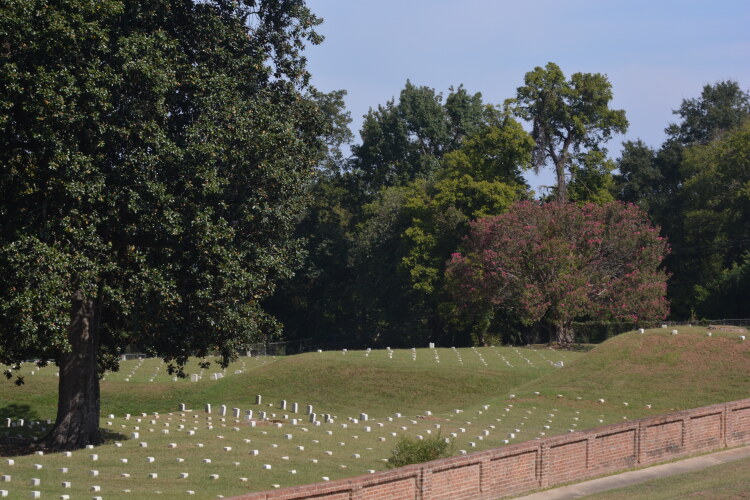
Some 17,000 Union soldiers and sailors are buried at the Vicksburg National Cemetery. Of that number, 13,000 are unknown. The Vicksburg cemetery is the largest Union cemetery in the country.
Public domain photo
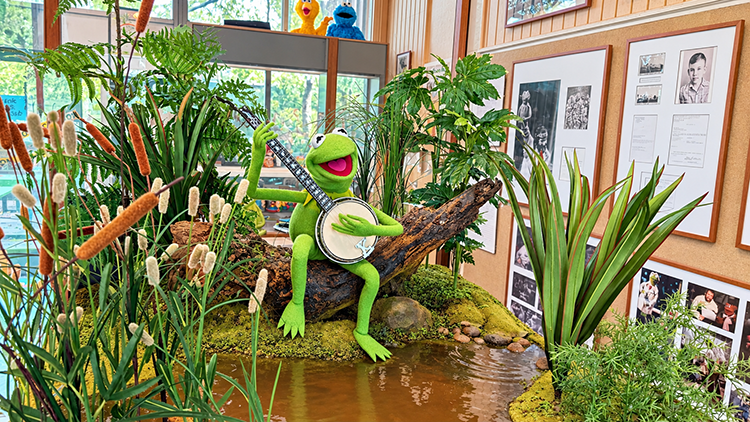
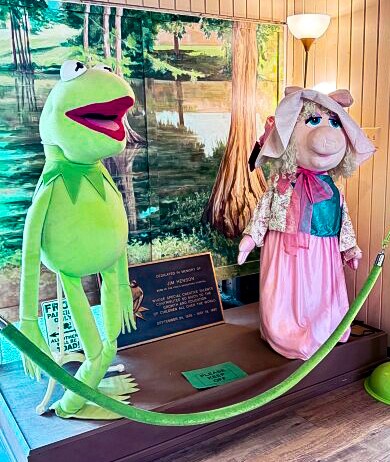
Another unexpected stop was Leland, Mississippi, birthplace of Jim Henson and Kermit the Frog. A small museum in a small town, but a huge repuation...we spent maybe half an hour looking at memorabilia, photos, souvenirs surrounding Kermit and the Muppets and learning more about the early life of Jim Henson and his childhood days in Leland.
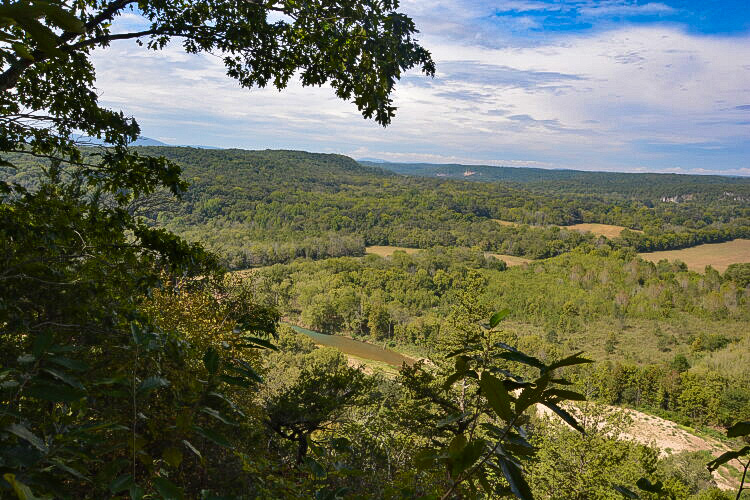
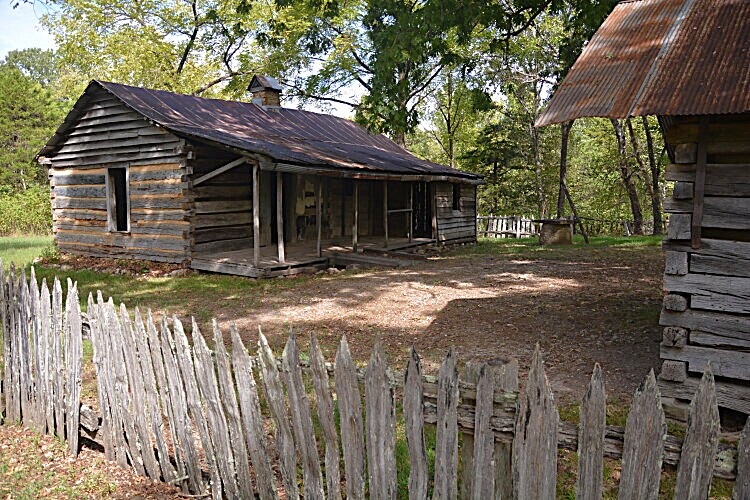
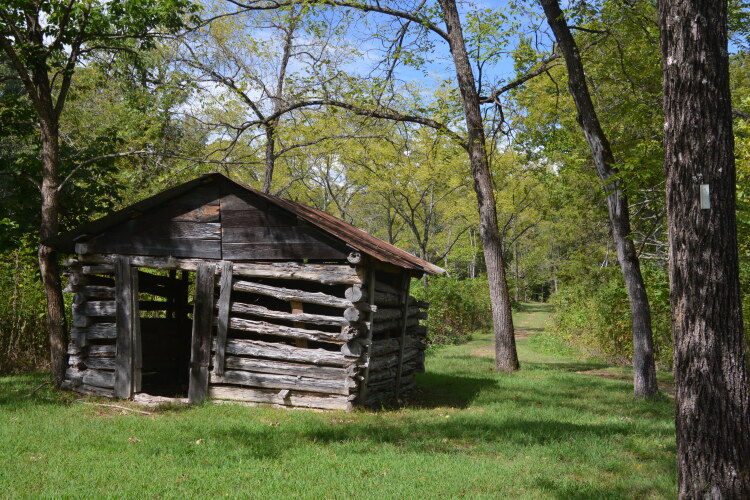
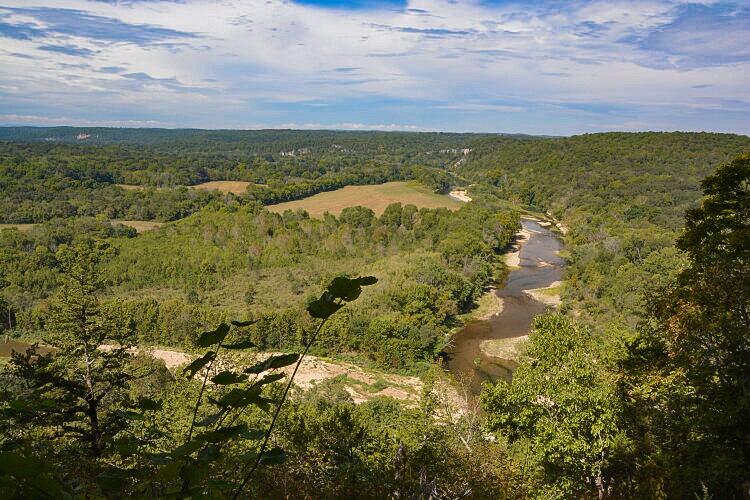
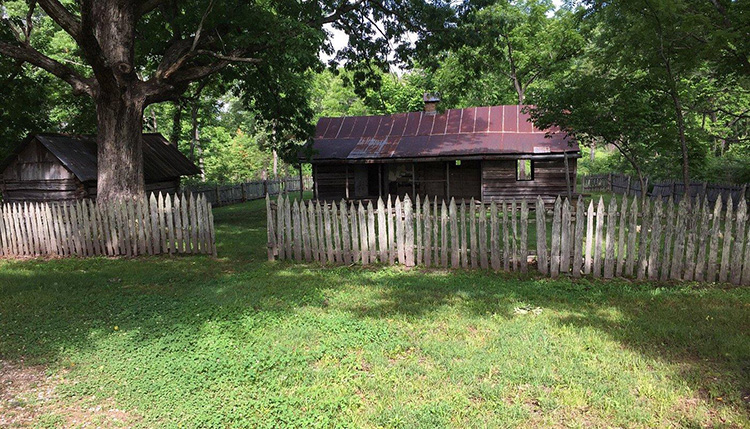
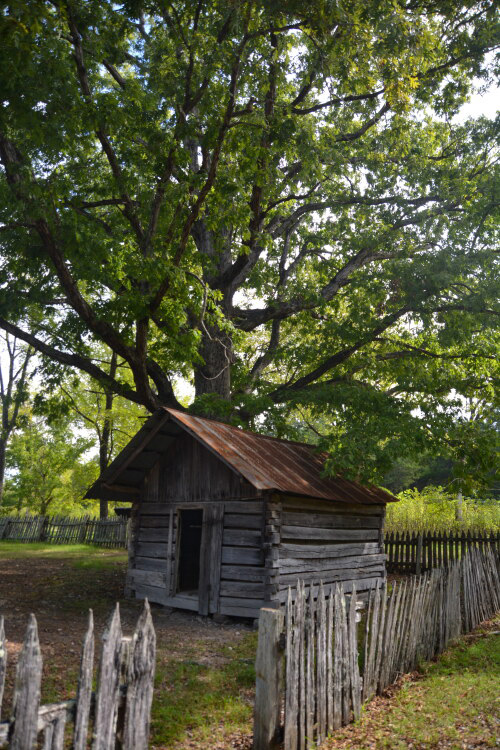
A short, easy stroll to us to an overview of the river, pictured above. Along the way we came across the Collier Homestead at Tyler Bend. Sod Collier and his wife Ida Mae moved from Kentucky in 1932 for a better life here along the Buffalo River. Taking advantage of the 1862 Homestead Act, Collier had five years to make improvements to the 40 acres he acquired. He and his family lived on the land for 30 years. This and the next three photos show their house, their storage barn, a smokehouse and, down the path, their animal barn.
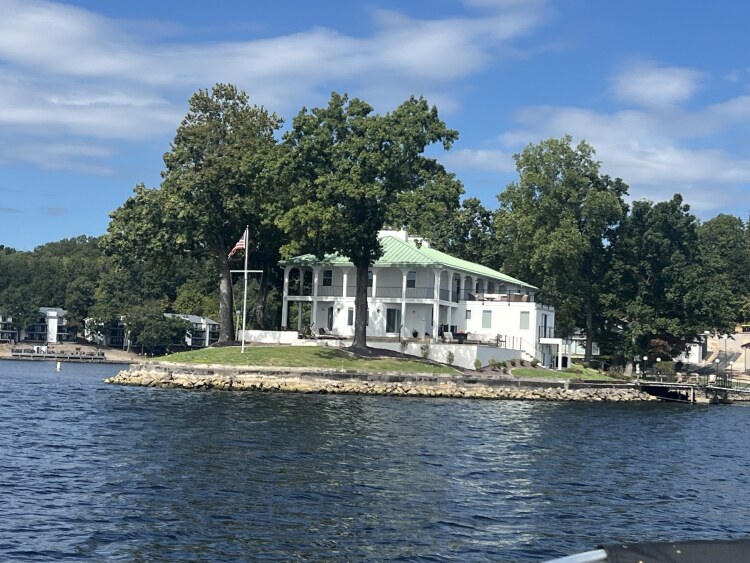
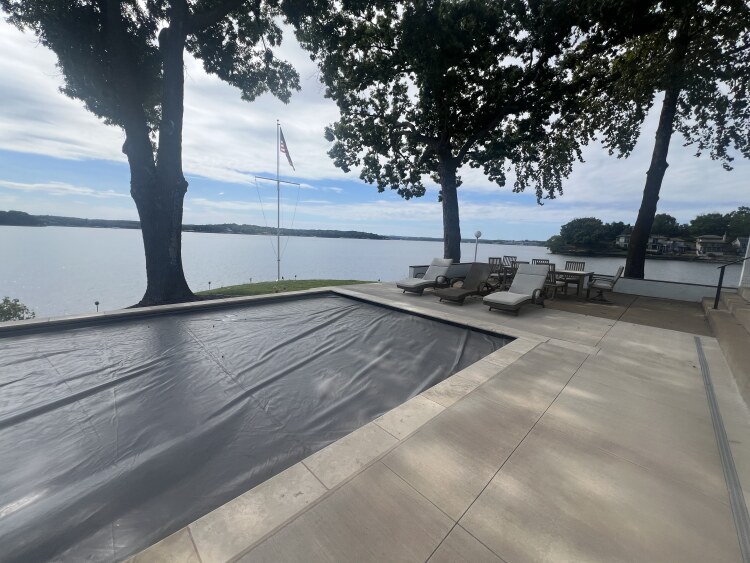
We finally made it to our destination around five in the afternoon. We will spend the next three days relaxing, swimming, eating, giggling and playing Ponytail Canasta. By January of next year, we will all be in Arizona, together again, weathering the winter. The fun will continue,
Photo by K. Ashmore
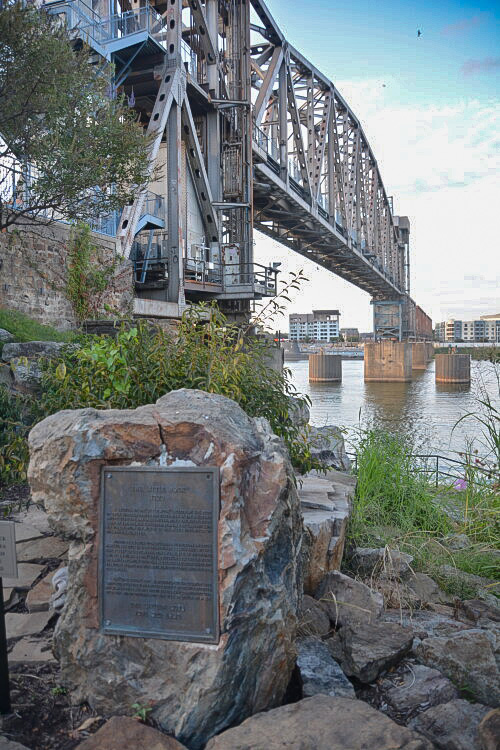
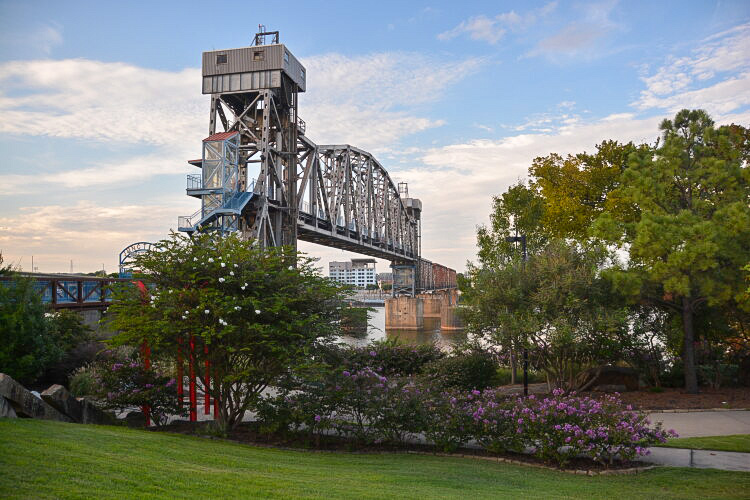
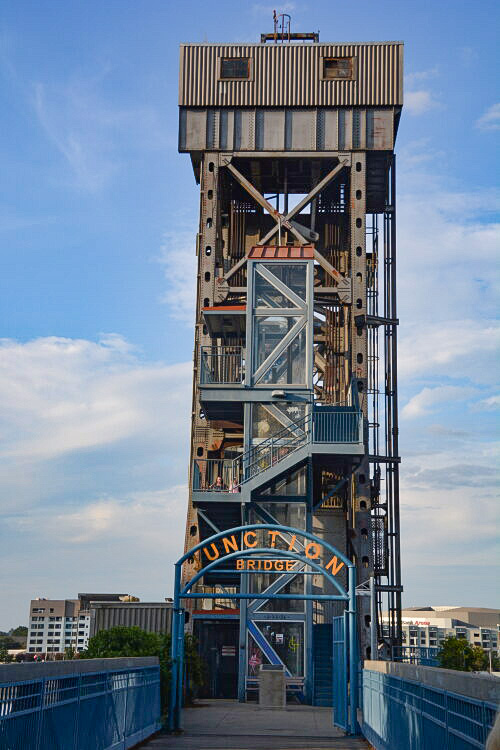
Our stopping point for the day was Little Rock, Arkansas. We arrived late in the afternoon and made our way to what seemed to be the most interesting sight: Riverfront Park. The park's highlights were Junction Bridge and the "le Petit Rocher," the rock for which the city is named.
Our walk across the pedestrian bridge led to the best comment of the day: When one of us asked, "What's on the other side?" the quick response was "free parking." That kinda sums up our short stay in Little Rock. The other "highlight," the little rock, was just that. It was a bit hard to find, being among other rocks of the same type. In early days it was a landmark to settlers who were navigating the Arkansas River.
The park was a great family place with an amphitheater, sculptures and kids' playgrounds. Had we more time, I think we would have seen more of what Little Rock has to offer.

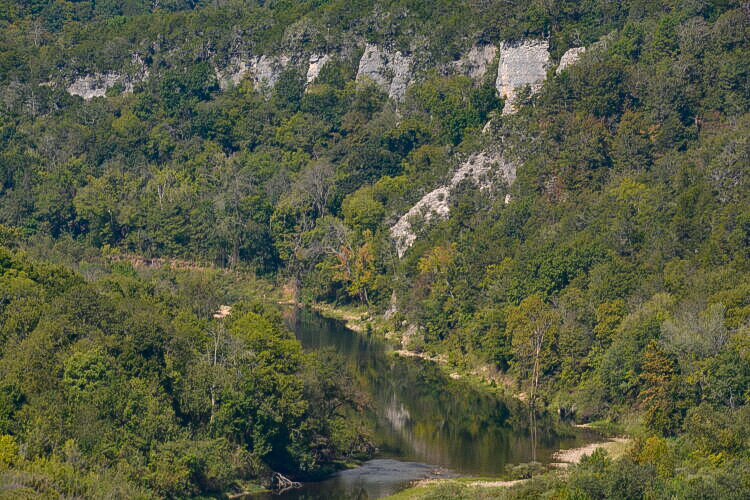
It's nice to have navigators who will find new places to see along the way. In northern Arkansas we happened upon the Buffalo National River. We stopped in at the Visitor's Center at Tyler Bend for more information. The river runs 153 miles generally in an east-west direction, all but 18 miles of it managed by the National Park Service.
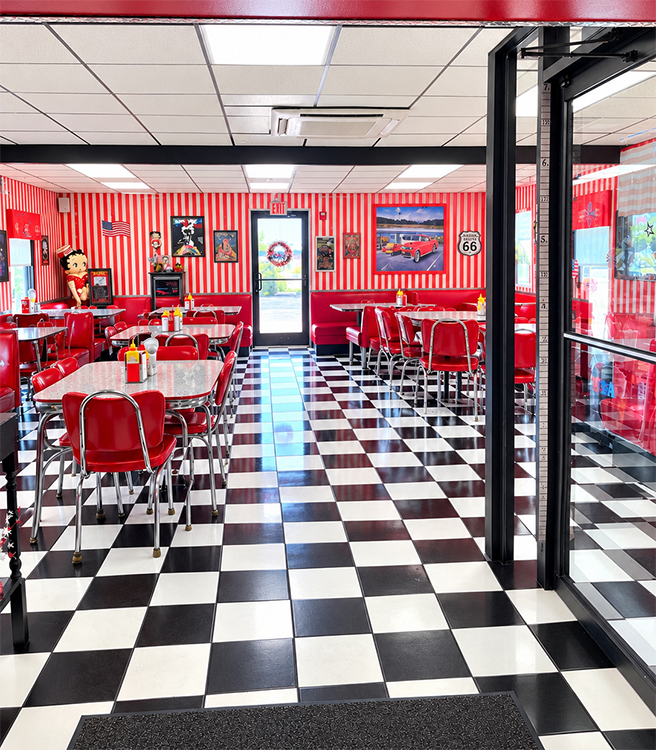
Day Four was the day we were to meet with our other peeps up in Rocky Mount, Missouri, on the Lake of the Ozarks. But we needed to grab a bite to eat since we wouldn't get there until around 5 in the afternoon. Now typically, we are healthy eaters, but when someone mentioned a burger and milkshake, we were on it. We found Billy Bob's Dairy Land in Branson, Missouri. Great, fun place. It was too late when we realized we were eating half-pounders!
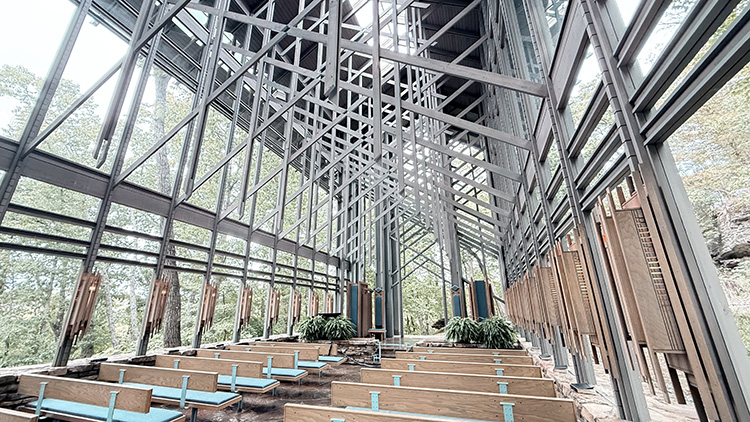
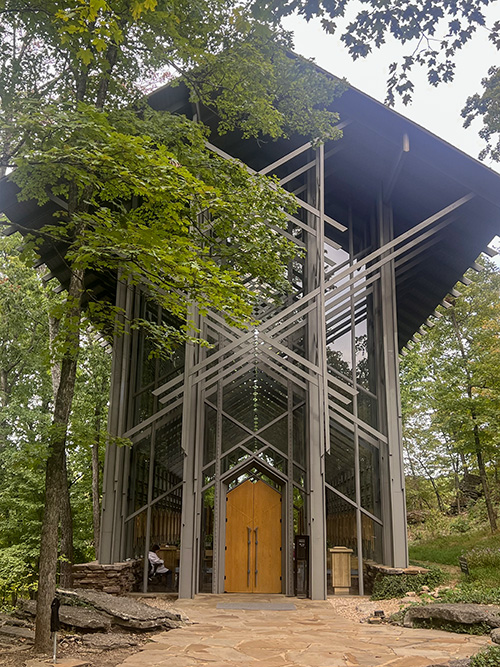
Thorncrown Chapel is located in Arkansas outside Eureka Springs in the Ozark Forest. The founder of the chapel is Jim Reed, who bought the property and hired an architect to design and build it. Interestingly, the architect, E. Fay Jones, studied under Frank Lloyd Wright.
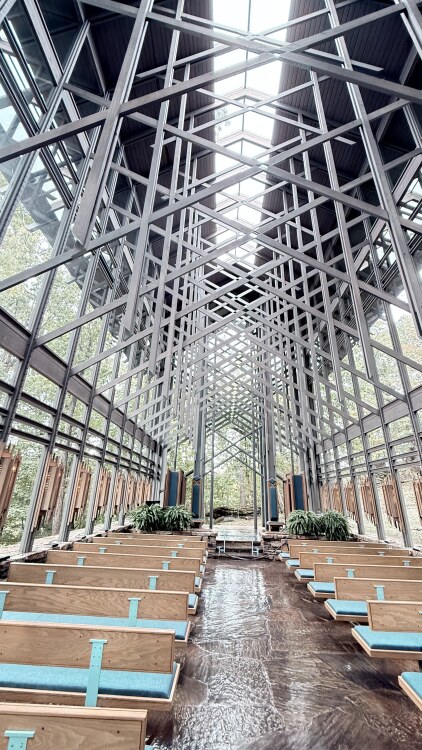
Jones' only stipulation in the building is that the surrounding woods remain as intact as possible, thereby not allowing any structure to be larger than two men could carry. The chapel is made of wood, glass and steel. It holds approximately 100 people and meausres 48 feet high, 24 feet wide and 60 feet front to back. It was opened to the public in 1980.
Sitting in the chapel you truly get a sense of being in the forest, not in a building. Looking through the glass, you'd think there was no glass at all.
Thank you for visiting these photo pages.
If you're interested in seeing more, please return to the Main Menu at the bottom of my home page and make your selection.
All images within thewanderingchick.com Web site are copyright protected. They may not be downloaded or otherwise copied.
Please contact me if you think a particular photo or set of photos can be used in your publication.
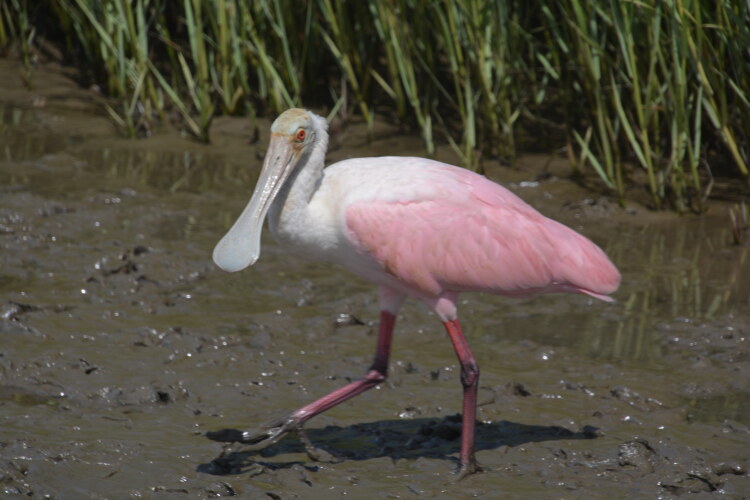
Our trip home was slighly different than going, We cut into east Texas and back to the Port Bolivar ferry. We stopped there for lunch, then took a short walk onto one of Bolivar's fishing jetties. We had hoped to see lots of coastal birds, and we weren't disappointed. Above is the Roseate Spoonbill. To the left is the Snowy White Egret. He must have just flown in from Kansas.
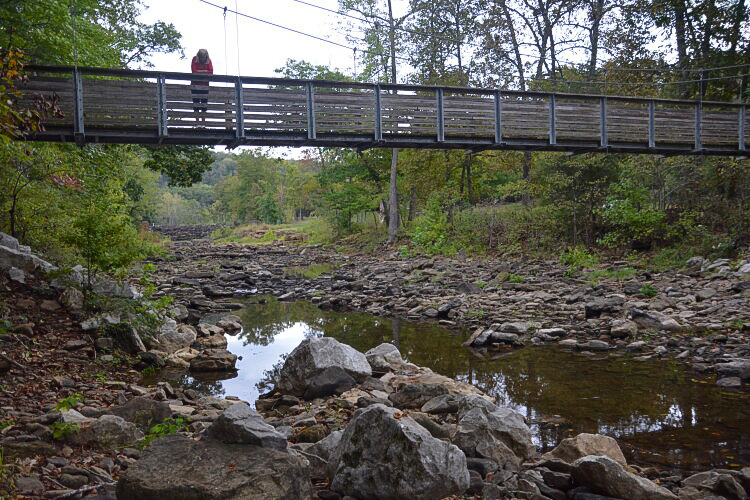
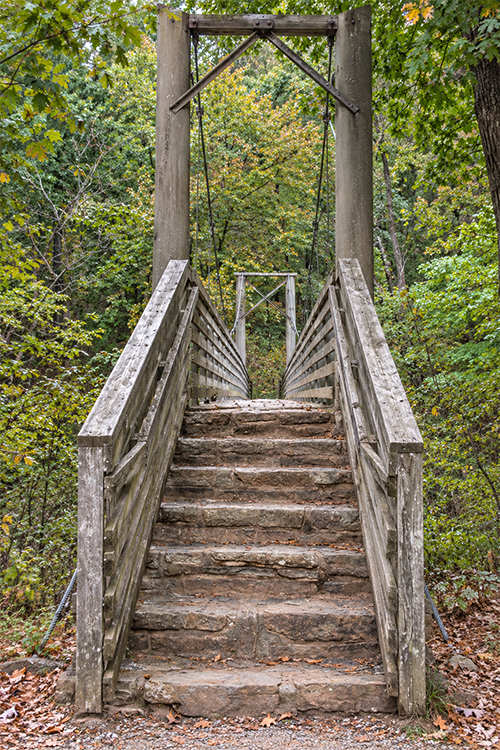
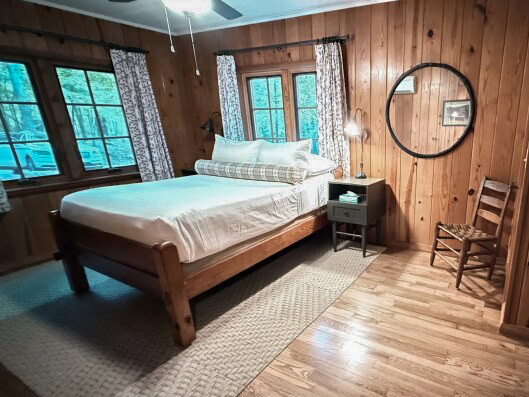
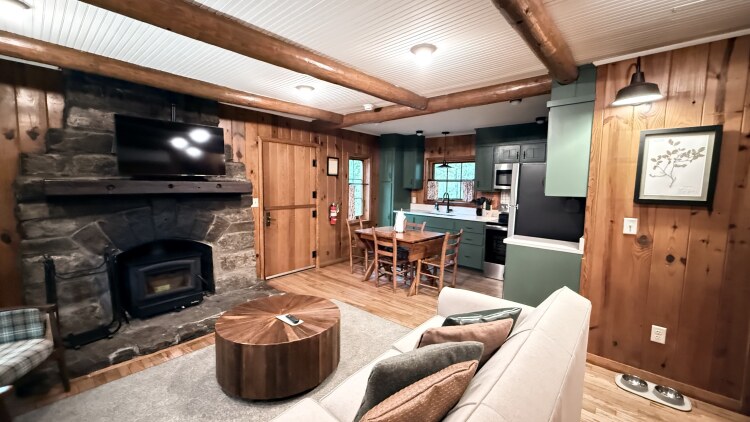
Devil's Den State Park in West Fork, Arkansas was a nice stay despite the gloomy weather. On brighter days, and on days when more water was running through it, it would have been more appealing, but we were quite content. We saw an armadillo, or two, something my two travel pals had never seen in person. That was a hoot. I think we agreed the best part of the stay was the cabin. So well done, newly renovated and all the comforts of home. The park was built during the Great Depression by the Civilian Conservation Corps (CCC).
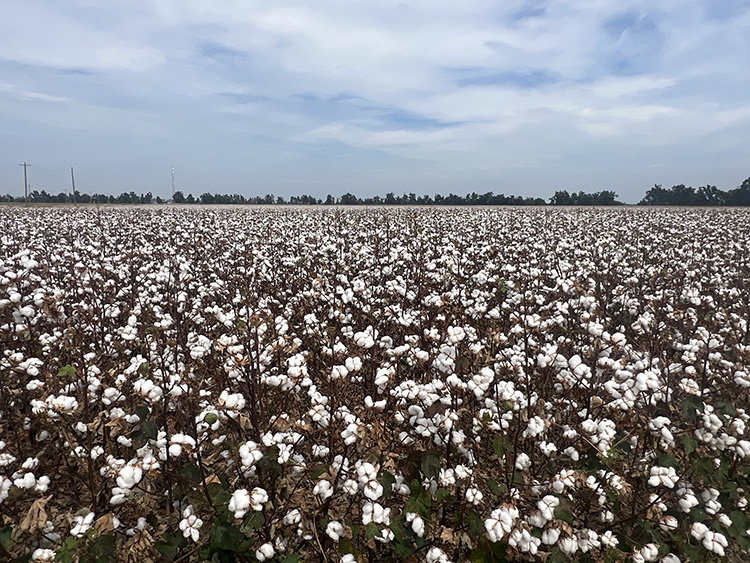
On Day Three we left Natchez in the rearview mirror and moved on northward toward Vicksburg. We made two unexpected stops: excited to see cottonfields not yet harvested, we needed pictures. From there we visited the Vicksburg (Mississippi) National Military Park, a significant battlefield of the Civil War.
Even more than 160 years later, it's not difficult to imagine the deep trenches that are now green with grass and far less deep.
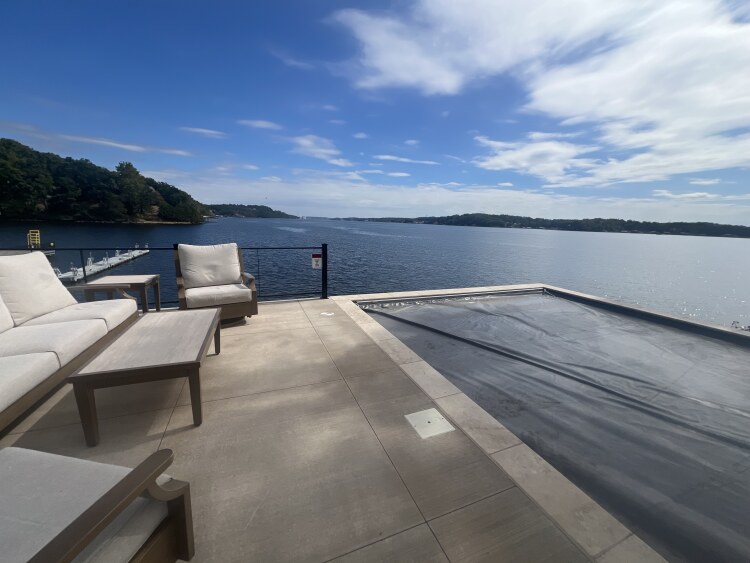
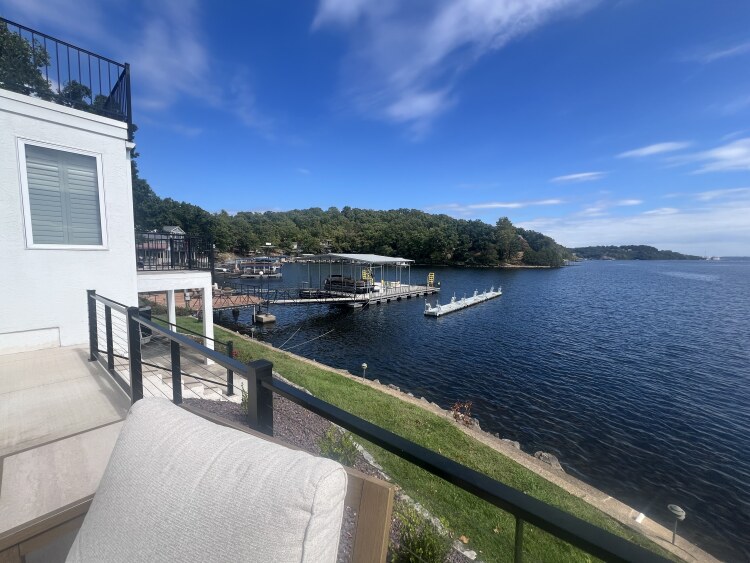
Our destination was Rocky Mount, Missouri, on the north side of the Lake of the Ozarks. Three of us peeps journeyed up from south Texas through Louisiana, Mississippi and Arkansas with little more than overnight bags, snacks and high hopes for a fun three days. Our itinerary was all planned out, allowing for plenty of stops for sights we might see along the way. And there were plenty!
Our Number One mission was to meet up in Rocky Mount with several other gals, all of whom winter in Arizona with us. Our Number Two mission was two full days of Ponytail Canasta games.
But back to the journey: We started out at 8 am on a Thursday with a ferry ride from Galveston, stopping for the night in Lafayette, Louisiana. On Friday we traveled to Natchez, Mississippi and on Saturday we stayed overnight in Little Rock, Arkansas.
Our two-day return trip was a different route through Arkansas and into east Texas before jumping the Port Bolivar ferry back to Galveston.
It's been said many times over that the journey is better than the destination. Well, in our case, it would be unfair to quote, but without hesitation, we can say it was One Grand Trip and back.
The following pictures represent our stops chronologically. Enjoy our journey.

.png)